Best Coffee Tamper for Home Espresso in 2026
 By groundsandcrema.com Editorial Team · Updated November 7, 2026
How we research: this guide is based on manufacturer specifications, published data and verified customer feedback. Products are not personally tested unless marked “Tested by us”. Our process.
We may earn a commission when you buy through links on this site, at no extra cost to you. As an Amazon Associate I earn from qualifying purchases.
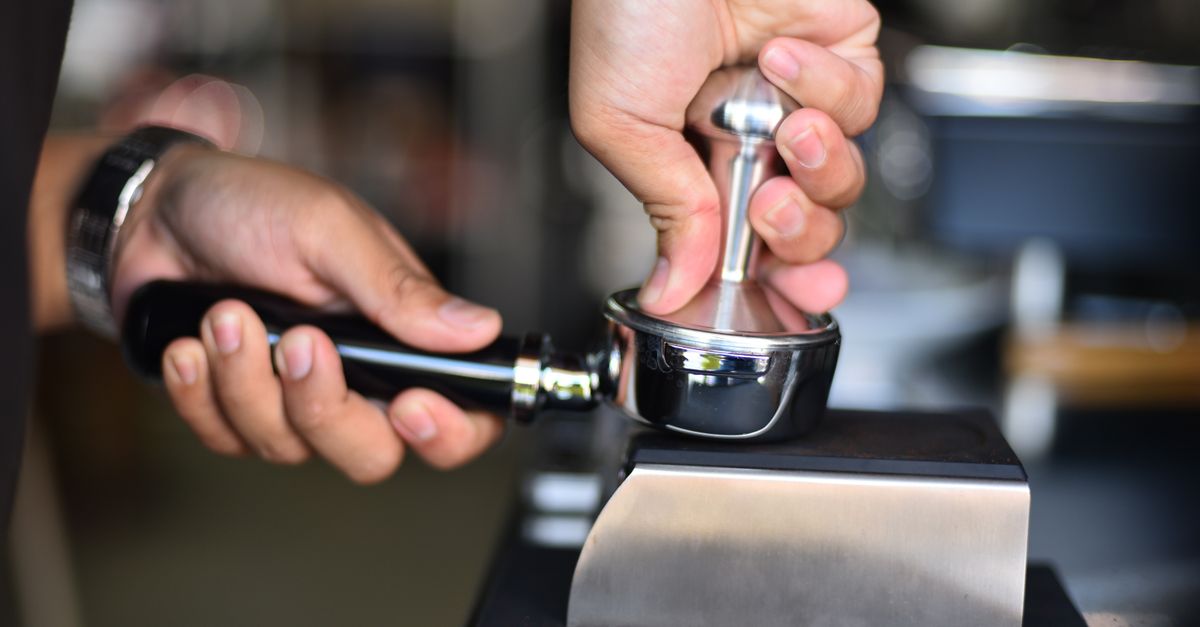
The best coffee tamper is the one that matches your basket first and feels stable in your hand second. For most home espresso setups, a well-fitting 58.5 mm spring-loaded tamper is the safest default.
If you are still dialing in shots, the tamper is only one part of the workflow. Grind size, distribution, and basket fit usually matter more than tamp force, which is why how to dial in espresso and a capable grinder matter so much.
Below, I break down the best options by basket size and style, then explain when a calibrated tamper is worth it and when a simple fixed tamper is the smarter buy.
Not sure which one to get? Answer a few quick questions.
Which Coffee Gear Fits You Best?Quick picks
Comparison table
| Model | Best for | Basket size(s) | Type | Standout detail | Check price |
|---|---|---|---|---|---|
| Normcore Spring Loaded Tamper V4, 58.5 mm | Most home baristas who want a safe Amazon default | 58.5 mm; other sizes available on the brand page | Spring-loaded / calibrated | Three spring options and flat or ripple base choices | AmazoneBay |
| MHW-3BOMBER FlowLight Constant Pressure Espresso Tamper, 58.35 mm | Users who want a guided tamp with feedback | 58.35 mm | Constant-pressure / calibrated | Audible click feedback and a 1-year warranty | AmazoneBay |
| LuxHaus 58mm Espresso Tamper – LuxHaus Premium Barista Coffee Tamper – 100% Flat Stainless Steel Base | Buyers who want a premium fixed tamper in a 58 mm size | 58 mm | Fixed tamper | Food-grade stainless steel, classic handle, elegant gift packaging, 10-year quality warranty | AmazoneBay |
Our picks in detail
Normcore Spring Loaded Tamper V4, 58.5 mm
Best for: Most home baristas who want a safe default for standard 58 mm baskets
Normcore's V4 is the easiest all-around recommendation if you want a spring-loaded tamper with broad size coverage. The official page offers 58.5 mm, 58 mm, 53.3 mm, and 51 mm versions, plus flat or ripple bases and three spring options.
For many 58 mm baskets, the 58.5 mm version is the most practical starting point because it reduces side play without becoming a fiddly specialty tool. It also comes with a stand, which is a nice quality-of-life touch for a busy espresso setup.
What owners mention: Verified owner feedback commonly praises the solid feel, repeatable tamping, and overall build quality. The most common complaints are size confusion, fingerprint-prone finishes, and the feeling that the calibrated mechanism is unnecessary once technique improves.
- Basket sizes
- 58.5 mm, 58 mm, 53.3 mm, 51 mm
- Pressure options
- 15 lb, 25 lb, or 30 lb springs
- Base options
- Flat or ripple
- Included accessory
- Stand included
- Cleaning note
- Do not use a dishwasher
Pros
- Wide size selection for different baskets
- Spring-loaded design helps repeatability
- Stand included for easier counter storage
- Amazon US listing is available
Cons
- Wrong-size ordering is still easy if you do not measure your basket
- Can feel like overkill if you already tamp very consistently
- Not dishwasher safe
Skip it if: You already own a simple fixed tamper that fits perfectly and you do not want a spring-loaded mechanism.
MHW-3BOMBER FlowLight Constant Pressure Espresso Tamper, 58.35 mm
Best for: People who want a calibrated tamper with a more guided feel and audible feedback
The FlowLight is a more feature-rich calibrated tamper with a 58.35 mm base, a three-spring constant-pressure mechanism, and audible click feedback. It is a strong Amazon option if you like the idea of a tamper that gives you a clearer cue at the end of the press.
Its ripple base and distinct color options make it a little more specialized than the Normcore default. That is not automatically better, but it can be appealing if you want a premium-feeling tool with a more obvious tactile response.
What owners mention: Verified owner feedback tends to praise the build quality, solid feel, and consistent tamping. The main complaints are that the extra mechanism can feel unnecessary for experienced users and that correct sizing still matters more than the tool's features.
- Basket size
- 58.35 mm
- Mechanism
- Constant-pressure design with three springs
- Feedback
- Audible click feedback
- Base
- Ripple base
- Warranty
- 1-year warranty
- Finish options
- Black gold and scorching red
Pros
- Clear tactile and audible feedback
- Sturdy, premium-feeling design
- Current Amazon US availability
- Useful if you want a more guided tamping routine
Cons
- Only one size is listed in the research notes
- More mechanism than some home baristas want
- Ripple base is more preference-driven than universal
Skip it if: You want a basic fixed tamper or you need a size other than 58.35 mm.
LuxHaus 58mm Espresso Tamper – LuxHaus Premium Barista Coffee Tamper – 100% Flat Stainless Steel Base
Best for: Buyers who want a premium fixed tamper in a 58 mm size
LuxHaus's tamper is a simple fixed option with a 58 mm flat base and food-grade stainless steel construction. The classic handle design keeps the shape familiar, while the elegant gift packaging and 10-year quality warranty make it a polished-looking choice.
This is the best fit in this lineup if you want a traditional tamper feel without a spring-loaded mechanism. It stays focused on the basics and keeps the buying decision simple for standard 58 mm baskets.
- Base
- 58 mm flat base
- Material
- Food-grade stainless steel
- Handle
- Classic handle design
- Weight
- 13.4 ounces
- Packaging
- Comes with elegant gift packaging
- Warranty
- 10-year quality warranty
Pros
- Simple fixed-tamper design
- 58 mm flat base for standard baskets
- Food-grade stainless-steel construction
- Classic handle shape
- Elegant gift packaging and long warranty
Cons
- Only one basket size is listed in the notes
- No spring-loaded guidance for users who want a calibrated tamper
- May be too simple if you want a more specialized base shape
Skip it if: You need a different basket size or want a spring-loaded/calibrated tamper.
Basket fit comes first
A tamper is only useful if it matches the basket correctly. The most common mistake is buying by brand or pressure style first and sizing second, which can leave you with an untamped ring at the edge or a tool that never seats cleanly.
For home espresso, the basket diameter is the first number that matters. If you are choosing between two close sizes, the better choice is the one that matches the inside of your basket more closely, not the handle that looks nicest.
- Measure the basket's inner diameter, not the outer rim or the portafilter handle.
- A base that is too small can leave a loose edge around the puck.
- A base that is too large will not seat correctly.
- For pressurized baskets, you do not need aggressive tamp force.
58 mm vs 58.5 mm
Many standard 58 mm baskets pair well with a 58.5 mm tamper because the slightly larger base tends to reduce wiggle and improve edge coverage. That said, basket walls and ridge shapes vary, so it is still smart to verify the exact basket dimensions before you buy.
- Use the machine manual or basket spec if it lists an exact diameter.
- If you already own a basket and tamper, check whether the tamper leaves visible side play.
Smaller baskets still need exact sizing
Machines with smaller baskets often use 53.3 mm or 51 mm tampers, and those numbers are not interchangeable. If you are shopping for a compact machine, confirm the basket spec before you assume a 58 mm tamper will work.
Tip: if your espresso setup is still in the buying stage, confirm basket size in the espresso machines buying guide before you add accessories. That single check saves a lot of returns.
- 53.3 mm and 51 mm are common on compact home machines.
- Do not buy from handle size alone; basket fit is what matters.
Spring-loaded vs fixed tampers
A spring-loaded or calibrated tamper can make your routine more repeatable, especially if multiple people use the same machine or you like having a clear end point to the press. It helps reduce variation, but it does not fix grind problems or sloppy puck prep.
A fixed tamper is simpler, lighter on mechanism, and often all you need if your technique is already consistent. If you care more about feel than features, the simple option can be the better long-term buy.
- Choose spring-loaded if you want a built-in consistency cue.
- Choose fixed if you value simplicity and fewer moving parts.
- Neither style replaces good grind size or even distribution.
- A calibrated tamper is about repeatability, not magic extraction gains.
What calibrated tamping actually changes
Good to know: a calibrated tamper mostly helps you tamp the same way more often. That can be useful when you are learning, when several people use the same setup, or when you want one less variable in your workflow.
- It can make the press feel more repeatable.
- It cannot compensate for poor distribution or an uneven grind.
When fixed is enough
If you already know how to tamp level and consistently, a fixed tamper may be the most sensible choice. Many experienced home baristas prefer the simplicity and direct feel of a basic tool.
- You do not need a spring-loaded model just because it is popular.
- If your technique is already solid, spend attention on grinder consistency instead.
Flat base or ripple base
For most people, a flat base is the safest default. It is the most familiar shape, and it keeps the buying decision simple when you are not sure whether a specialty base will help your workflow.
Ripple bases are more of a preference choice than a universal upgrade. They can feel different in use, but they are not a shortcut around proper dose, distribution, and grind quality.
- Flat bases are the most versatile starting point.
- Ripple bases are more niche and preference-driven.
- Pick the base that matches your existing workflow, not the trendiest one.
- If you are unsure, start flat and keep the rest of your setup simple.
Why most home baristas start flat
A flat base is easy to understand, easy to pair with any basket, and easy to compare across brands. That makes it the least risky pick if this is your first serious tamper.
- Good for first-time buyers.
- Works well across a wide range of baskets.
When ripple makes sense
Ripple is worth considering if you already know you prefer that contact feel or you are choosing a tamper as part of a matched accessory set. Otherwise, it is usually better to treat it as a secondary preference.
- Best when you already have a reason to prefer it.
- Not a required upgrade for better espresso.
The tamper is not the whole espresso setup
A great tamper cannot rescue a grinder that produces inconsistent particle size or a puck that was distributed poorly. If your shots are channeling, tamp force is usually not the first thing to blame.
For most home setups, the biggest wins come from the grinder, the dose, and even distribution before tamping. If you still need help choosing the bigger-ticket gear, start with the espresso grinder guide and then revisit your puck prep routine with how to dial in espresso.
- Distribution tools and WDT often matter more than extra tamp force.
- A level tamp matters more than a hard tamp.
- If your machine uses a pressurized basket, light tamping is enough.
- A tamper is the finishing step, not the fix for everything.
How the grinder changes the equation
A more consistent grinder gives you a more even bed to tamp in the first place. That usually makes the tamper feel more effective because the puck starts in better shape.
- Better grind consistency usually means fewer puck defects.
- If you are upgrading gear in order, the grinder often comes first.
FAQ
What size coffee tamper do I need?
Match the tamper to the inside diameter of your basket, not just the portafilter model. Many 58 mm baskets work best with a 58.5 mm base, but you should always verify the basket spec first.
Is a spring-loaded tamper better than a regular tamper?
Not automatically. A spring-loaded tamper can help with repeatability and give you a clearer end point, but a fixed tamper is simpler and works just as well if your technique is already consistent.
Does a ripple base make espresso better?
Not by itself. Ripple changes the contact pattern and feel, but grind size, distribution, dose, and basket fit matter much more than the base texture.
Do I need a tamper if my machine has a pressurized basket?
Yes, but you do not need heavy tamp force. Pressurized baskets are more forgiving, so a light, level tamp is usually enough.
Why is my tamper leaving a ring?
It usually means the tamper size is off or the basket wall geometry is different from what you expected. Check the basket diameter again and make sure the tamper can sit flat without side play.
Should I buy the tamper before the grinder?
Usually no. If you are prioritizing upgrades, the grinder usually has a bigger impact than the tamper, so it often makes sense to improve grind consistency first and then choose the tamper that fits your basket.
The bottom line
For most home espresso setups, the best coffee tamper is the one that fits your basket cleanly and keeps your workflow repeatable. If you want the safest Amazon default, start with the Normcore V4 in the correct size for your basket.
If you want a more guided feel, the MHW-3BOMBER is a solid calibrated alternative. If you prefer a simple premium fixed tamper and want a 58 mm flat stainless-steel option, LuxHaus is the one to look at first.
Reader experiences
Own one of these? Your experience helps other readers decide.